

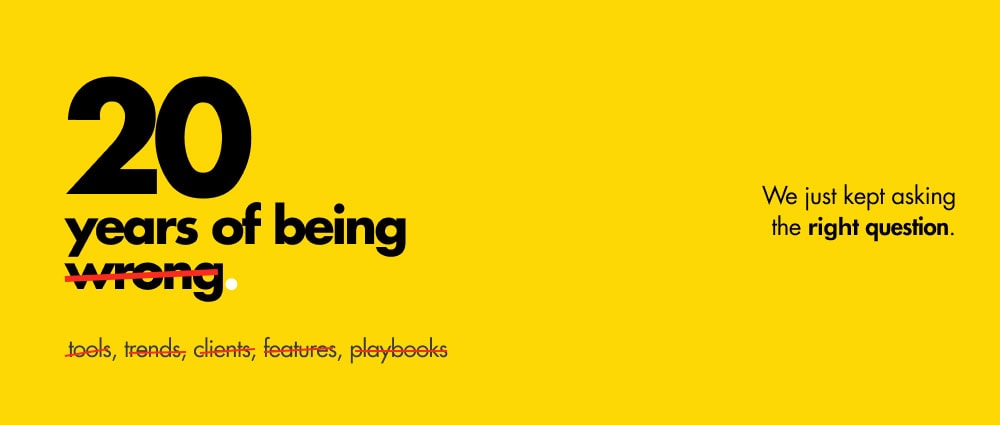

20 Years of Roars: Built on Purpose, Driven by Impact
I almost didn’t write this.
Not because I don’t have things to say. I have too many things to say. Twenty years of things. And most anniversary posts I’ve read feel like they were written by someone who wants you to think they had it figured out all along.
We didn’t. So this isn’t that post.
Here’s What 20 Years Actually Feels Like
It feels like Tuesday.
Seriously. There’s no orchestral swell. No moment where you look around and think, “Yes, this is exactly what I envisioned.” There’s just the next problem to solve, the next client call, the next thing that broke in production at the worst possible time.
The milestone only feels significant when you stop and look back. And when you do, the thing that surprises you most isn’t how far you’ve come. It’s how many times you could have quit, and didn’t.
Not because you were brave. Mostly because you were stubborn.
The Projects I Don’t Put in Case Studies
Every studio has a portfolio. Clean. Curated. The greatest hits.
Nobody talks about the projects where you built the wrong thing. Where you were so deep into execution that you stopped questioning whether you were solving the right problem. Where you delivered exactly what was scoped, invoiced it, and six months later heard it never quite worked the way anyone hoped.
We’ve had those. More than I’d like to admit. And honestly, those taught me more than any project that went well. Because when things go well, you don’t always know why. When things go wrong, if you’re paying attention, you know exactly why.
The reason was almost always the same. We built what was asked for instead of asking better questions first.
The Conversation That Changed How We Work
A few years in, I was sitting with a founder smart guy, clear vision, well-funded going through a product brief. It was detailed. Forty-seven features across three user types. Timeline: four months.
I almost just said yes. Instead, I asked him one question.
“If your user could only do one thing in this product — one thing that would make them come back tomorrow — what would it be?”
He paused for a long time. Then he said, “I don’t actually know.”
That conversation cost us the project. He wanted someone who would just build it. We weren’t that studio. But it also became the way we start every engagement now. Because that question – simple, uncomfortable – tells you more about whether a product will work than any feature list ever could.
What I Wish Someone Had Told Me About UX
UX is not a phase in your project timeline. It’s not something that happens after the brief and before development. It’s not a deliverable you hand off. It’s not the visual layer you polish at the end. UX is the moment where your business strategy meets an actual human being.
And that human being doesn’t care about your vision. They care about whether they can figure out what to do in the next three seconds. Whether the thing they came to do is easy. Whether they feel like they’re in good hands or whether something feels slightly off and they can’t explain why but they’re already closing the tab.
That’s the game. And most products are losing it in places they’re not even looking. We’ve spent 20 years trying to help founders see those places before they become expensive problems.
The Clients Who Shaped Us
Not the biggest logos. Not the fastest-growing companies. The ones who showed up with real problems and trusted us enough to be honest with them.
The founder who built a beautiful product that nobody could figure out how to use — and let us rip it back to basics without flinching. The operations team running a logistics business on spreadsheets who’d been burned by two agencies before us and were openly skeptical the whole time. The healthcare startup that made us slow down and really think about what it means to design something when the person using it is scared.
Every one of those clients made us better. Not because the work was easy. Because it wasn’t.
The Thing About Staying Small on Purpose
We could have scaled faster. A few times, we chose not to. More headcount, more overhead, more projects you take because you need to cover salaries rather than because you believe in them. I’ve watched studios go that route. Some of them built impressive things. Some of them lost the thing that made them good.
Staying focused — fewer clients, longer relationships, more ownership over what we build — that was a deliberate choice. It still is.
It doesn’t make for a dramatic growth story. But it means that when someone works with Roars, they’re working with people who actually care whether the thing works. Not just whether it ships.
That distinction matters more than I can explain in a paragraph.
What’s Coming — And Why I’m Actually Excited
Here’s what I know about the next few years. AI is not coming for product designers and developers. It’s coming for the parts of product development that were never the interesting parts anyway. The repetitive stuff. The boilerplate. The first draft of a hundred things.
What’s left the judgment calls, the hard questions, the understanding of what a real person actually needs and why that’s getting more valuable, not less. And for the first time in a long time, founders who couldn’t afford to build the right way now can. That changes everything about who gets to build good products.
We’re here for that.
If You’re Building Something Right Now
The product you’re building is going to be used by a real person, in a real moment, under real pressure. They won’t read your vision statement. They won’t care about your tech stack. They’ll just try to do the thing they came to do.
Your job – our job – is to make that as obvious and frictionless as possible. Everything else is secondary. Twenty years in, that’s still the whole thing.
Schedule an appointment today and receive a complimentary consultation.
